

Solitary Bees
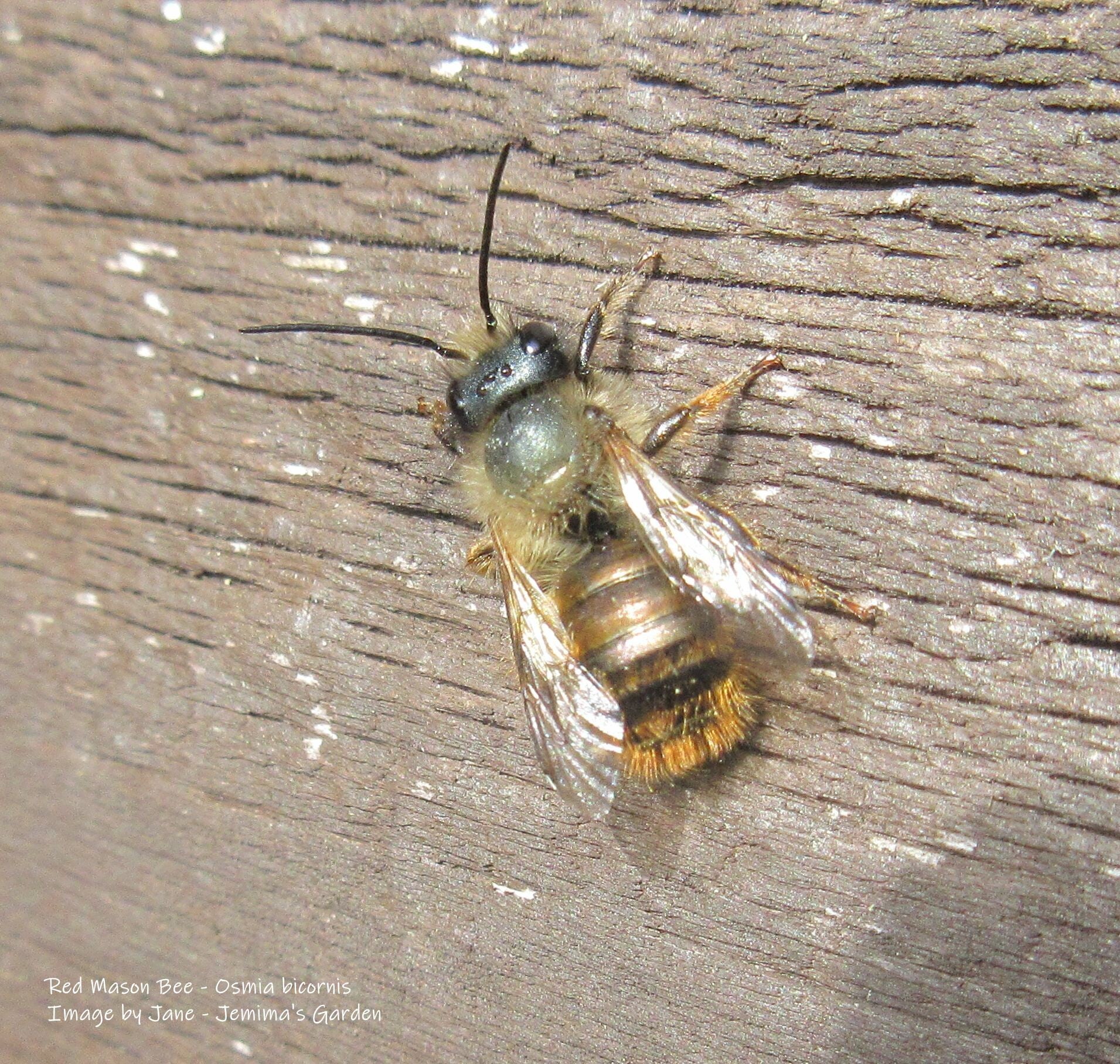
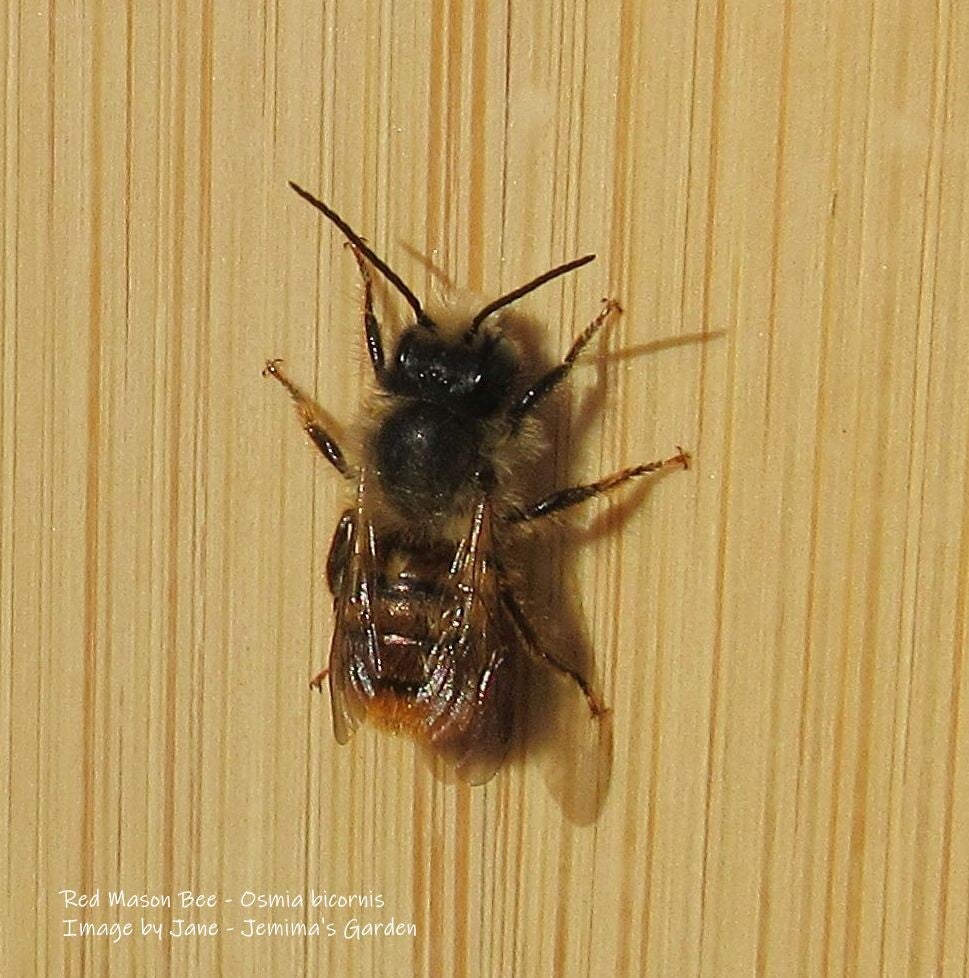
Red Mason Bees - Osmia bicornis
These delightful little Bees are around fairly early in the summer and are more than happy to use man-made tubes as "nests".
The males of the species have white patches of fur on their faces and the females have two little "horns" which they use to handle mud to seal their nests.
We've got several "Bee Hotels" which contain the nest tubes which the female Mason Bees fill with cells. She puts some mixed pollen and nectar into each cell and lays an egg on the top of the food. Each cell is then sealed with a mud mixture.
The larvae then stay in the tube, develop into Bees and emerge the next spring.
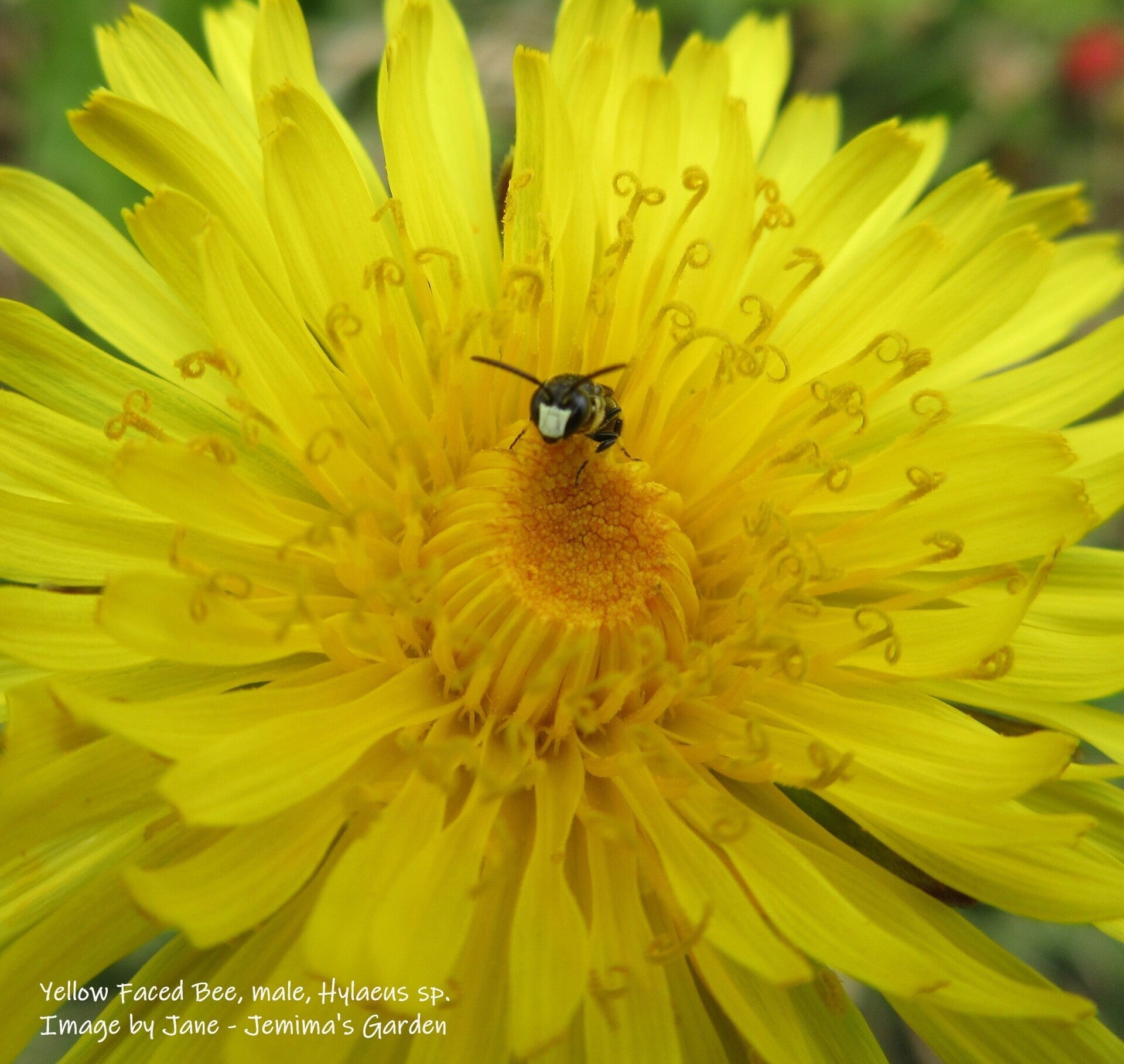
Yellow Faced Bee -Hylaeus species - Male
These tiny little bees, 6-7mm long, nest in in burrows in soil, woody, dead stems and also in wall crevices.
Unusually, these bees collect nectar and pollen in their crops, (I didn't know bees had crops), and regurgitate it when they get back to their nest.
This one was gathering food from a Dandelion - Taraxacum officinale, a native wildflower.

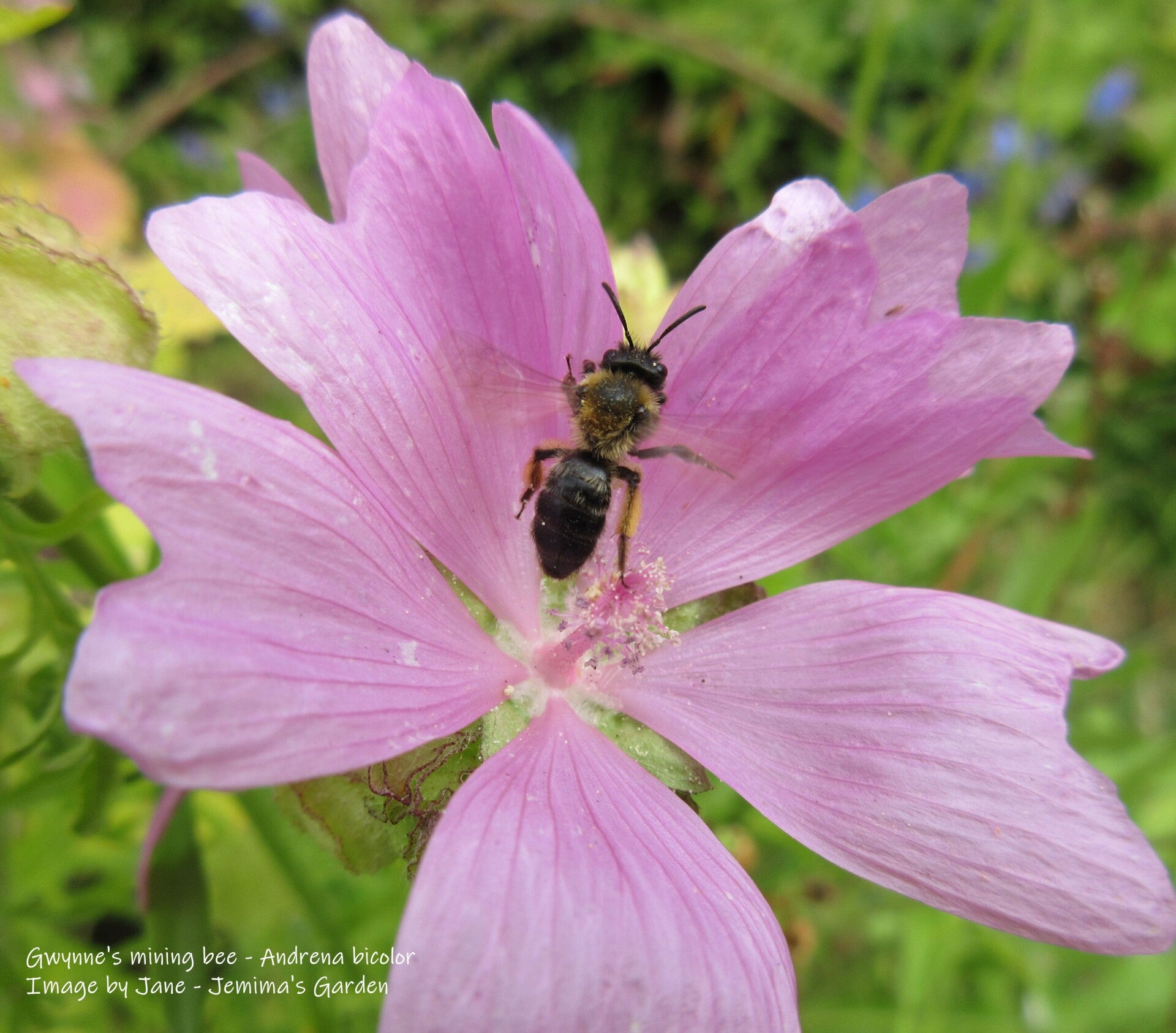
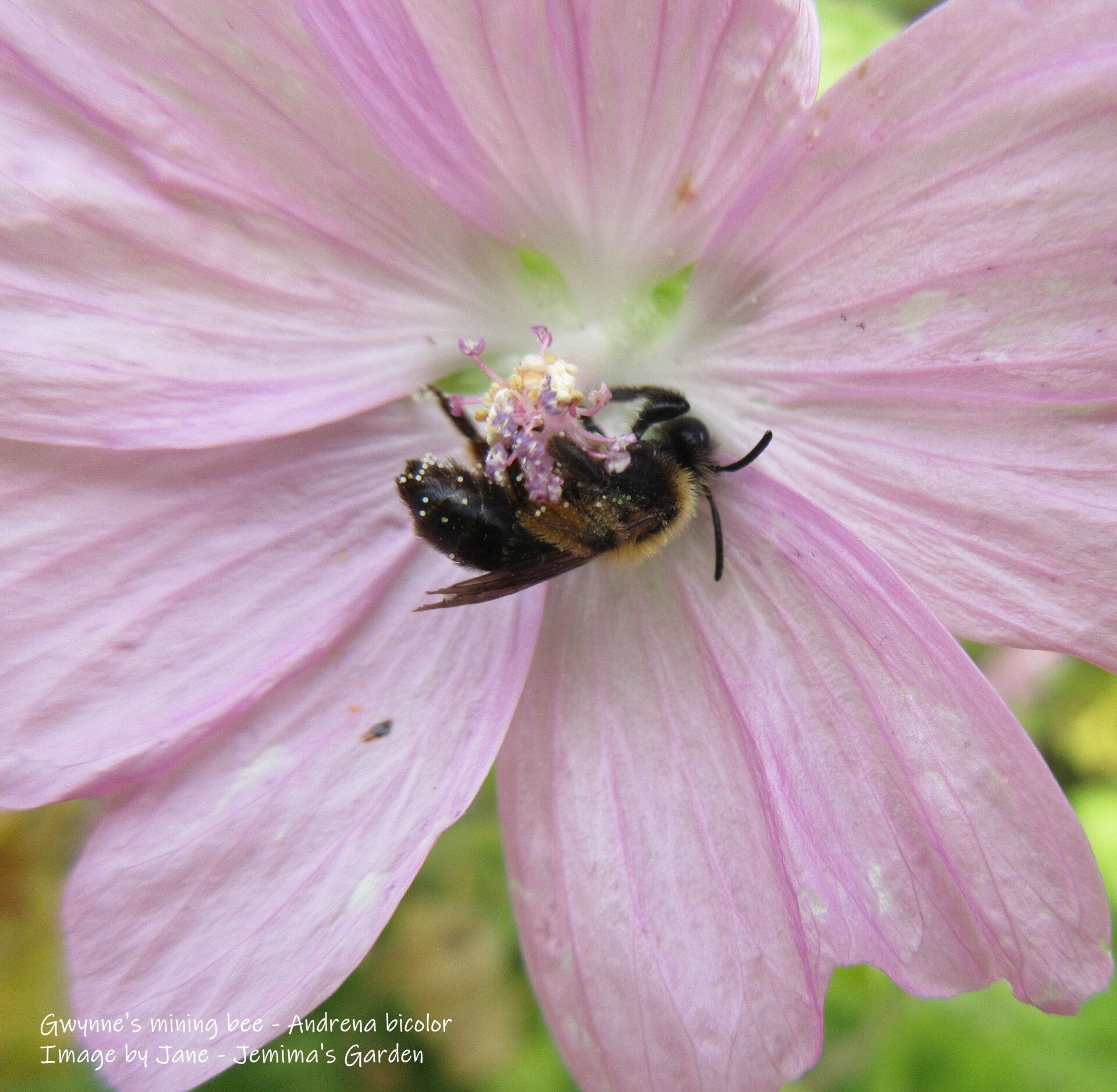
Gwynne's Mining Bee - Andrena bicolor
This small, solitary mining bee, (9-11 mm females and slightly smaller males) visited our garden in July and was very keen on diving into our Musk Mallow (Malva moschata).
They nest in the ground constructing a nest containing a several cells, in soft soil.
The females gather pollen using their pollen brushes on their hind legs which they then place in the cells. She then lays a single egg in each cell.
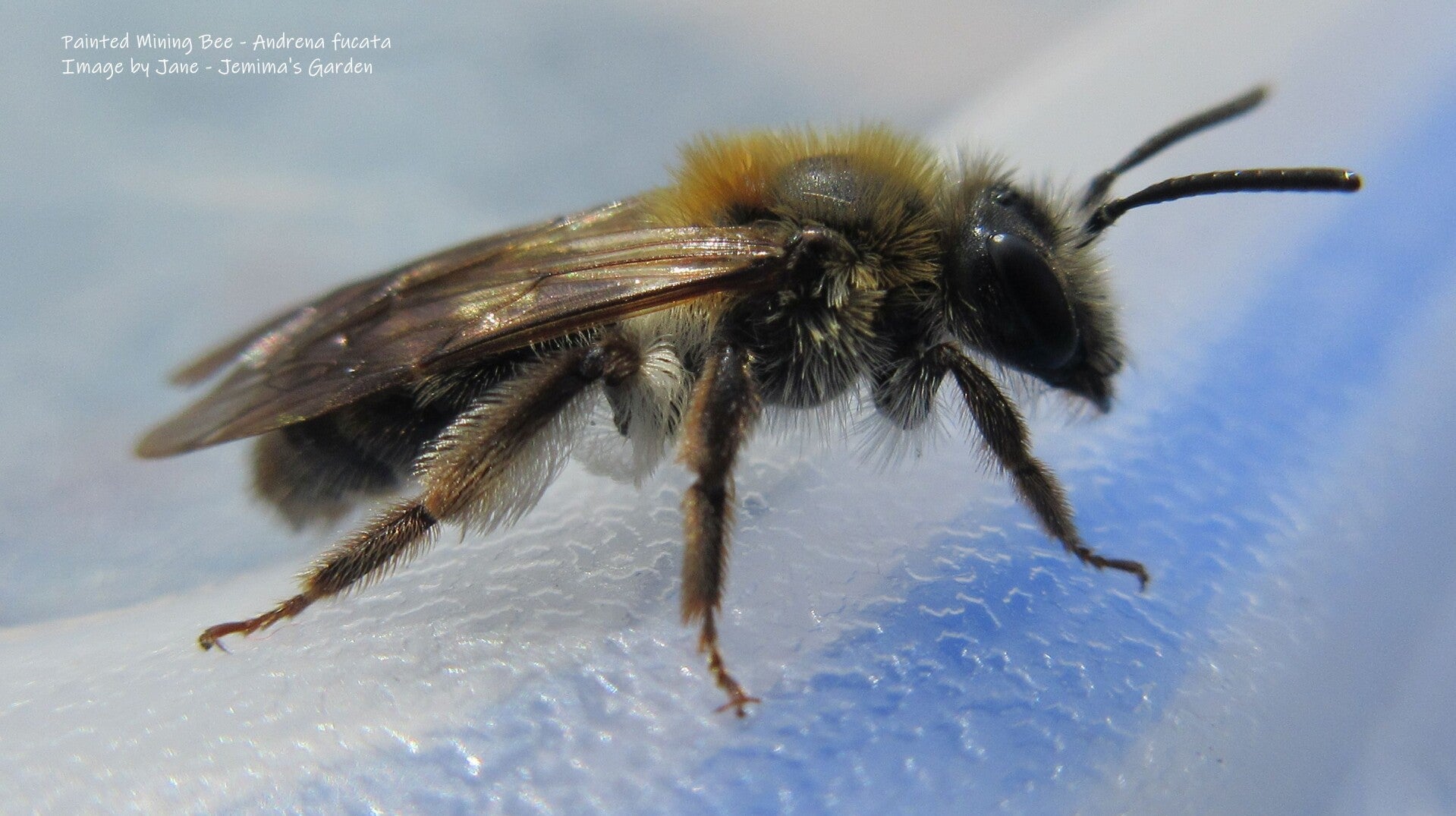
Painted Mining Bee - Andrena fucata
This little solitary bee grows up to 9mm long and the females construct individual burrows in soft soil.
These are provisioned with nectar, an egg is laid in each one which is sealed and left.
Next spring, the young Bees will emerge from their burrows and the life-cycle starts again.
Sorry, I've no further information about this Bee which inconveniently wasn't on a flower when I spotted it.
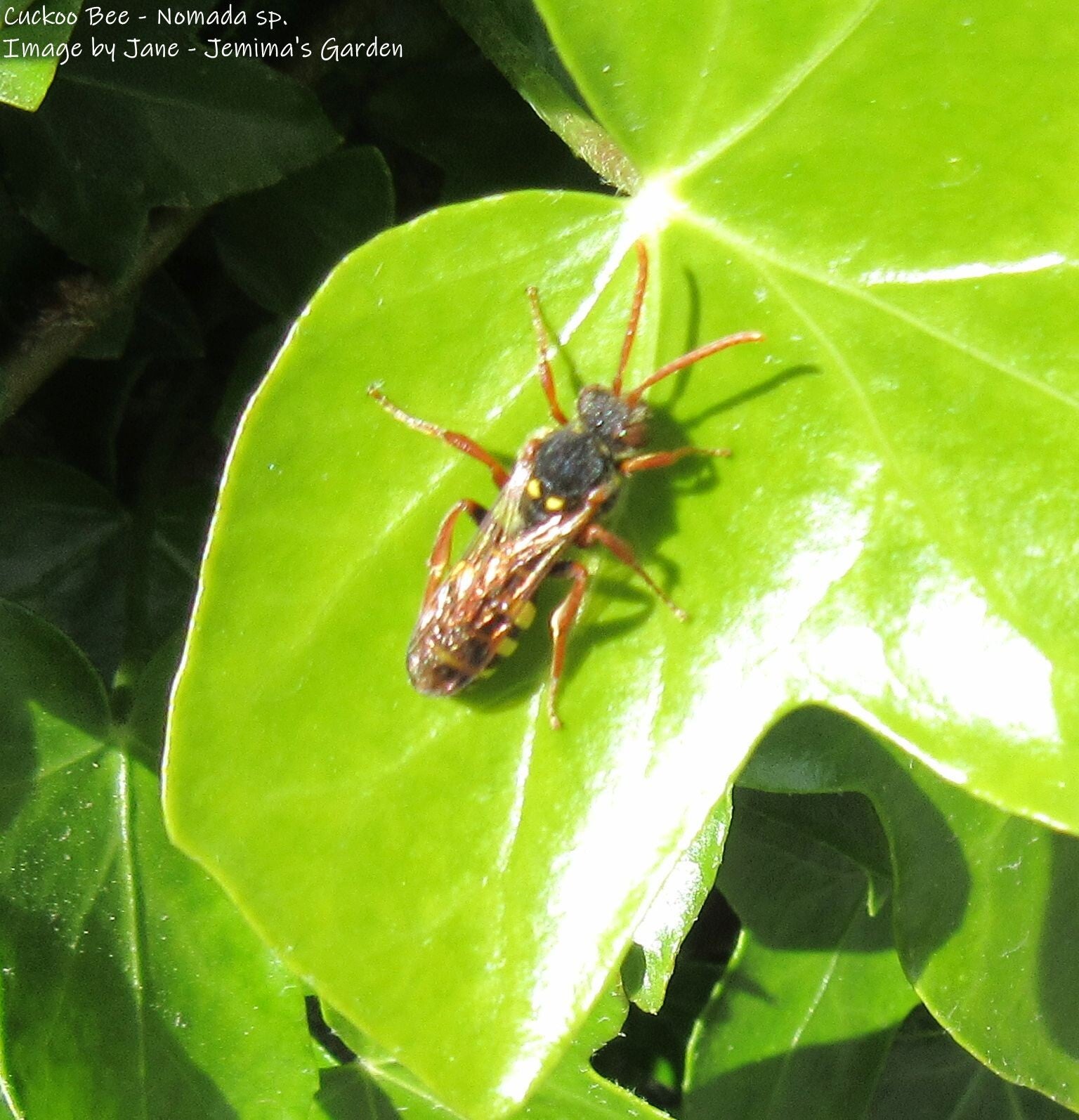
Cuckoo Bee - Nomada sp.
Although this may look like some kind of wasp, they're actually a Cuckoo Bee.
This means that although they drink nectar from flowers and the females eat pollen from flowers, they don't collect the pollen to take back to a nest.
In fact, they've done away with the whole nest business and instead lay their eggs in the nests of other Bees.
When the eggs hatch the Cuckoo Bee larvae eat the host Bee's pollen that they've provided for their own young and will even eat the larvae of the host Bee too.
I'd love to know exactly which Cuckoo Bee this is in order to know which Bee it parasitises. Any suggestions/corrections gratefully received.
Hoverflies
Neoascia sp. (Female)

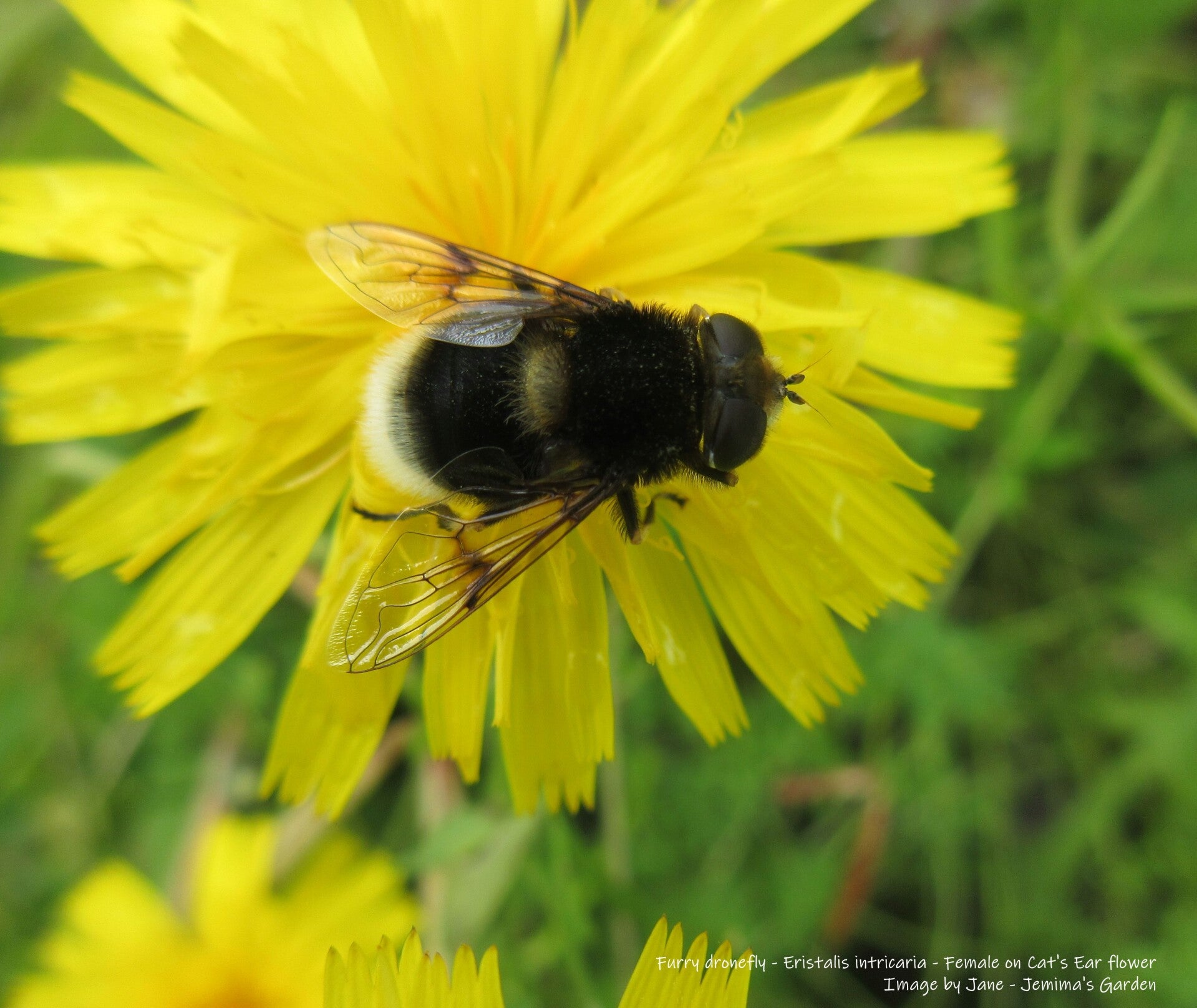
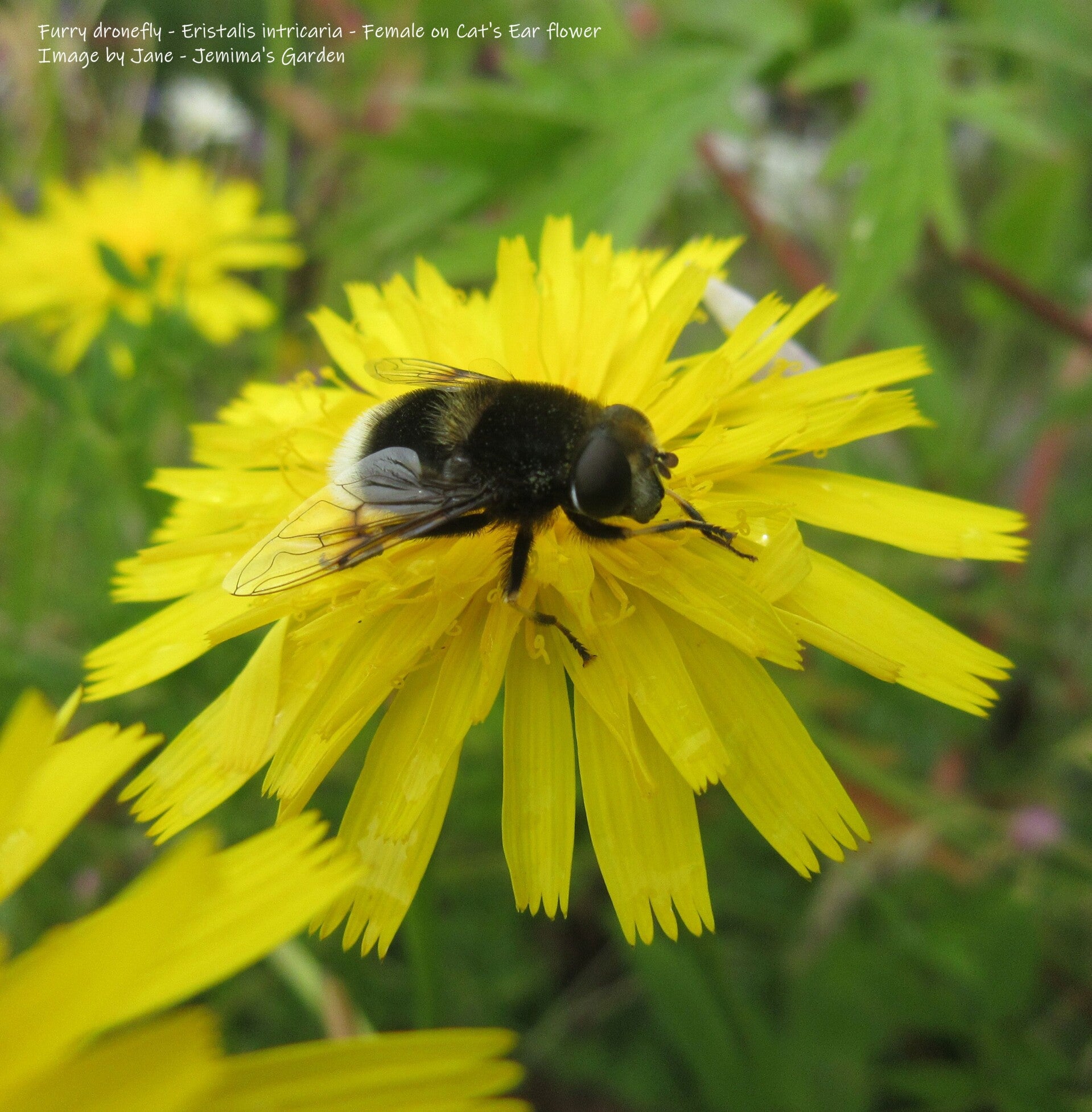
Furry Dronefly - (Eristalis intricaria)
This Bumblebee mimic feeds on nectar and pollen from flowers and in our garden was attracted to Cat's Ear flowers - Hypochaeris radicata.
These are one of the Hoverflies whose larvae are known as "rat-tailed maggots".
Their initial growth takes place in water which preferably has rotting vegetation in it and they do look like a whitish maggot. The "rat-tail" is actually a breathing tube which they use like a snorkel and allows them to breathe when they are underwater.
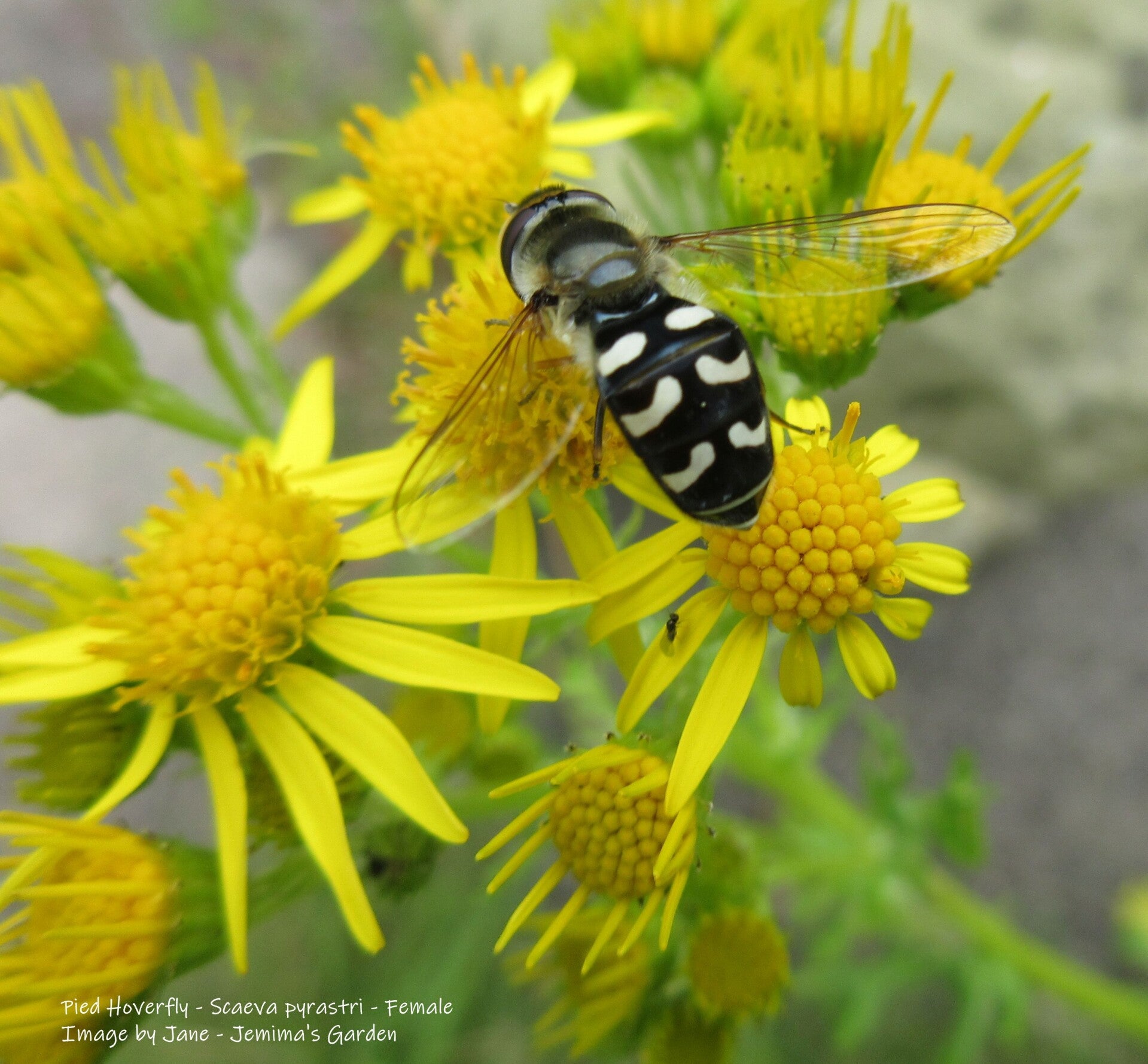
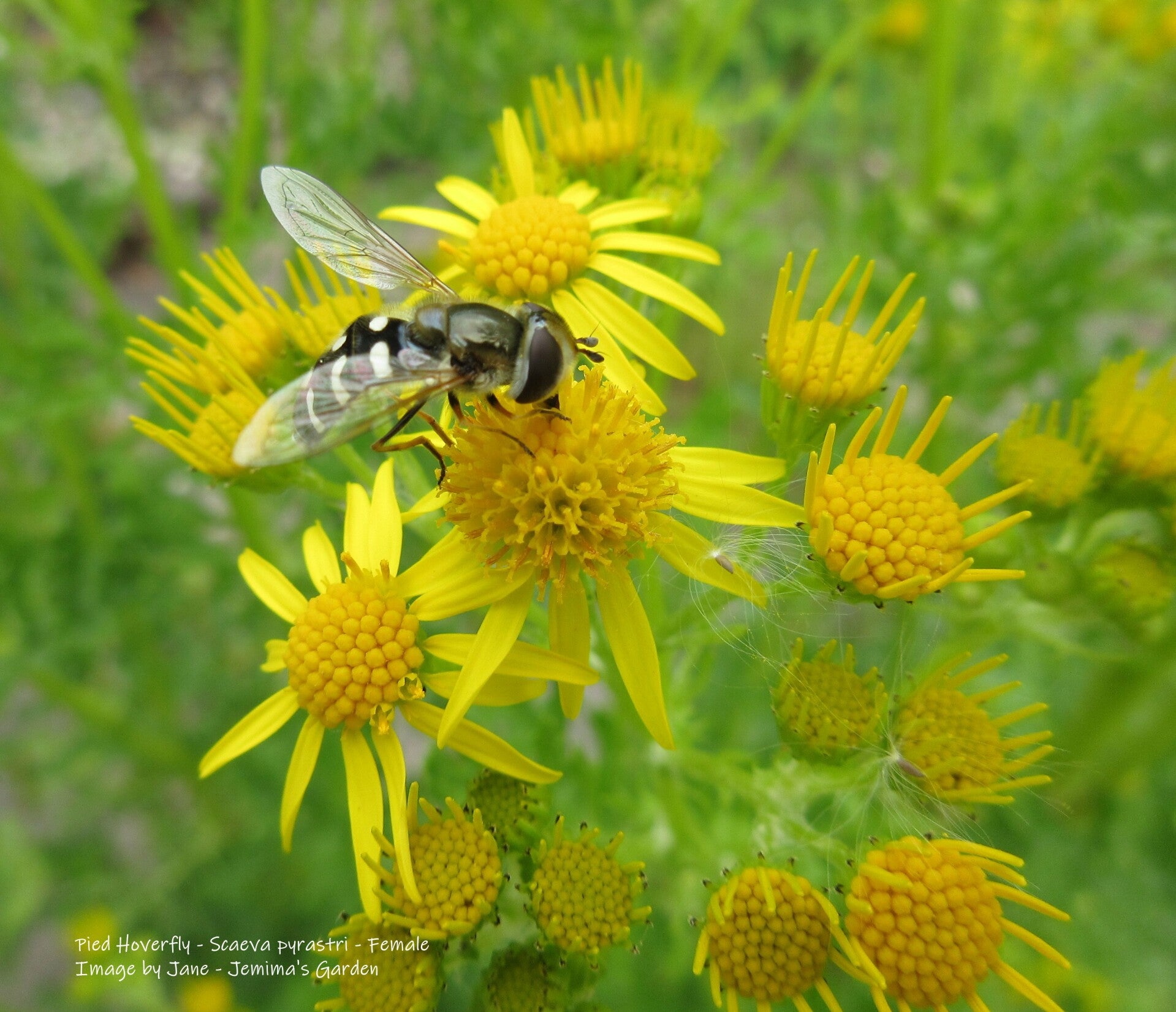
Pied Hoverfly - Scaeva pyrastri
These Hoverflies reach a length of 11–15 millimetres. The one in the pictures is a female.
Their larvae feed on aphids and are either light green or pink with a white stripe. They look a little like short caterpillars that are pointed at one end.
The adults can be seen between April and September in the UK and are attracted to a variety of different flowers. Here, they're particularly keen on Common Ragwort - Senecio jacobaea
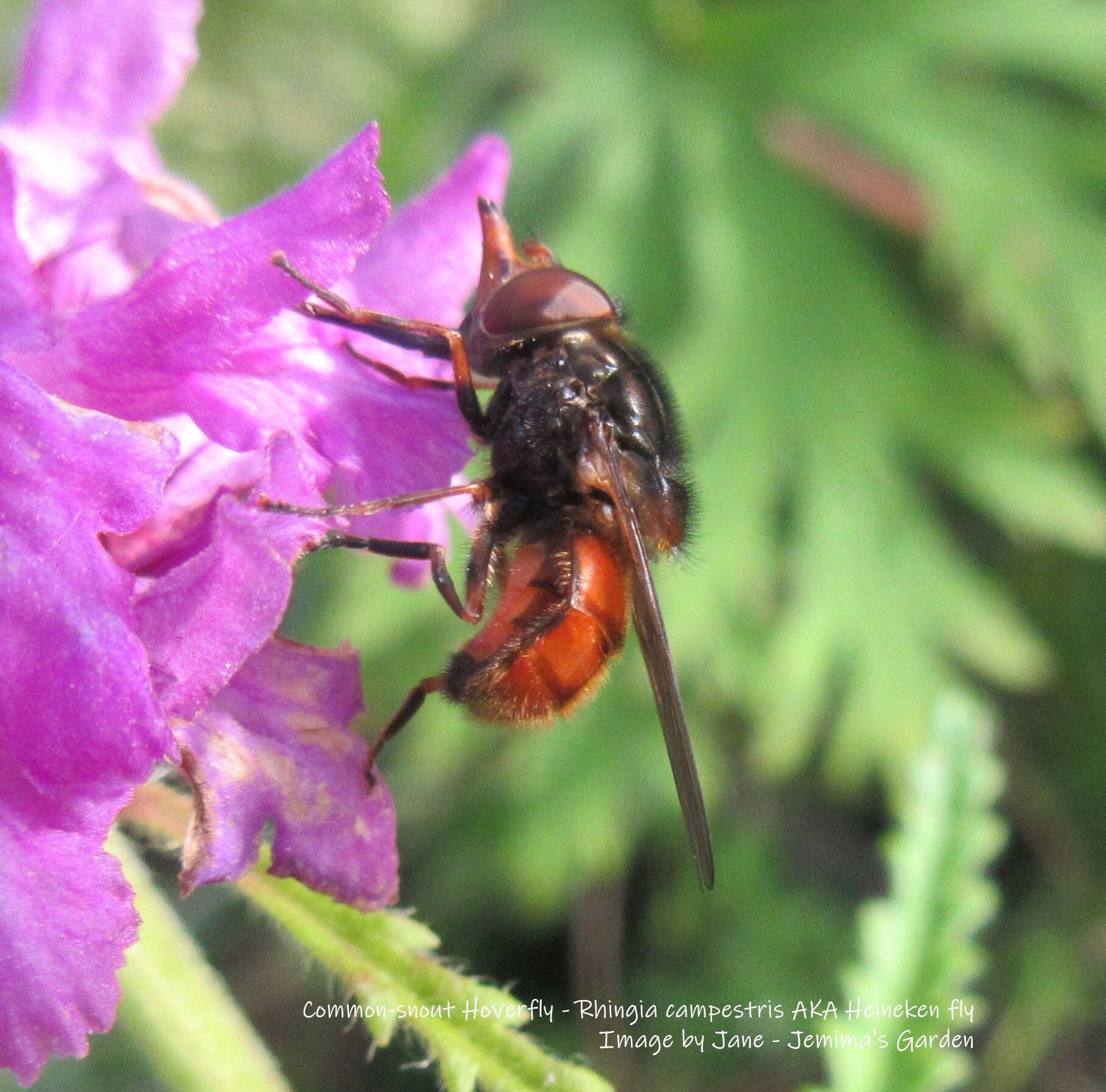
Common-snout Hoverfly - Rhingia campestris
AKA Heineken fly
This is a common Hoverfly, usually between 0.7 to 1.1 cm in length and can be found in gardens, hedgerows and woodlands between March to November.
It was attracted to the Betony - Betonica officinalis, in our garden.
You'll notice that it has a long snout.
This means it can take nectar from deeper flowers, reaching the parts other Hoverflies cannot reach - hence its nickname 😊
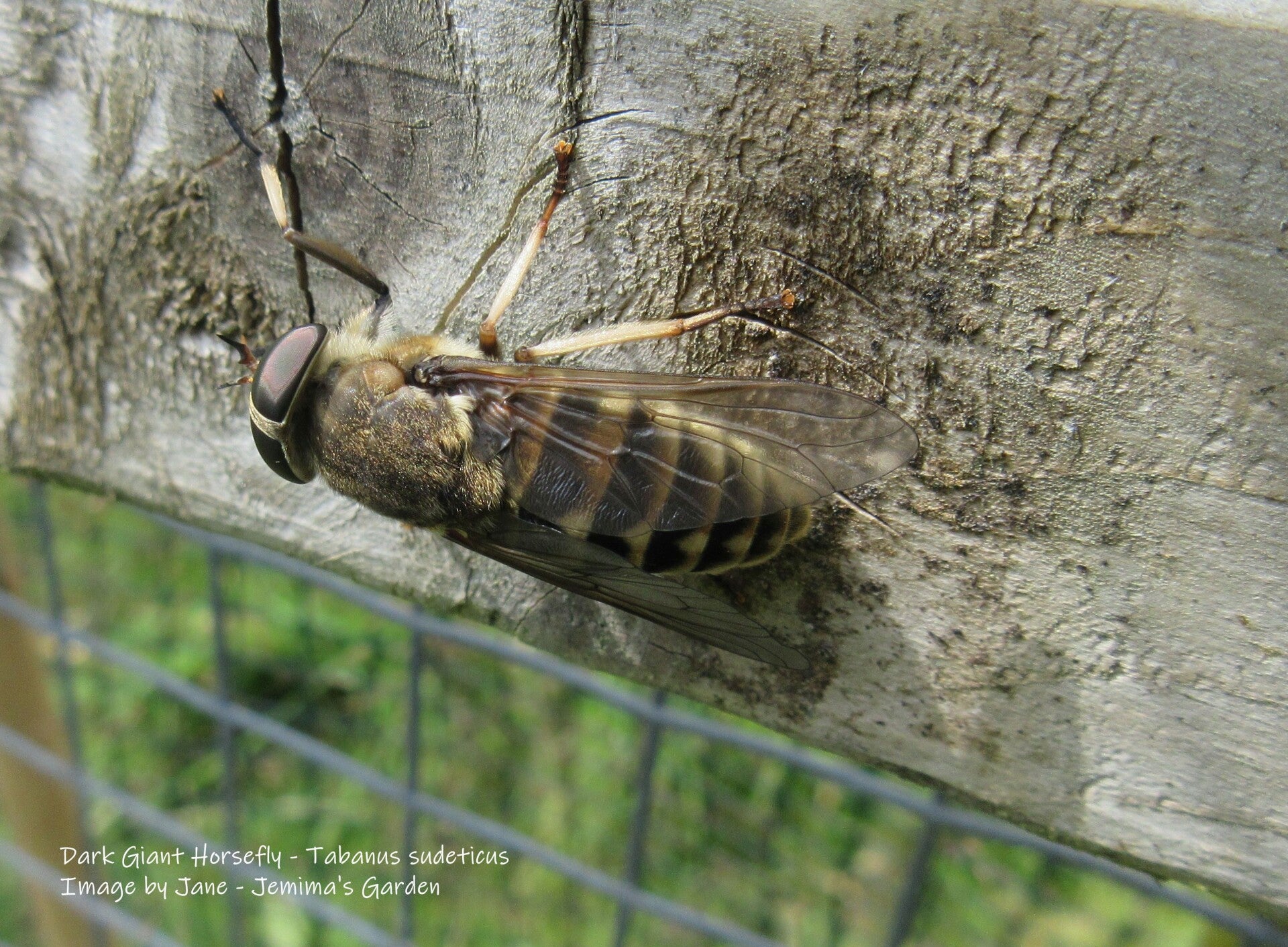
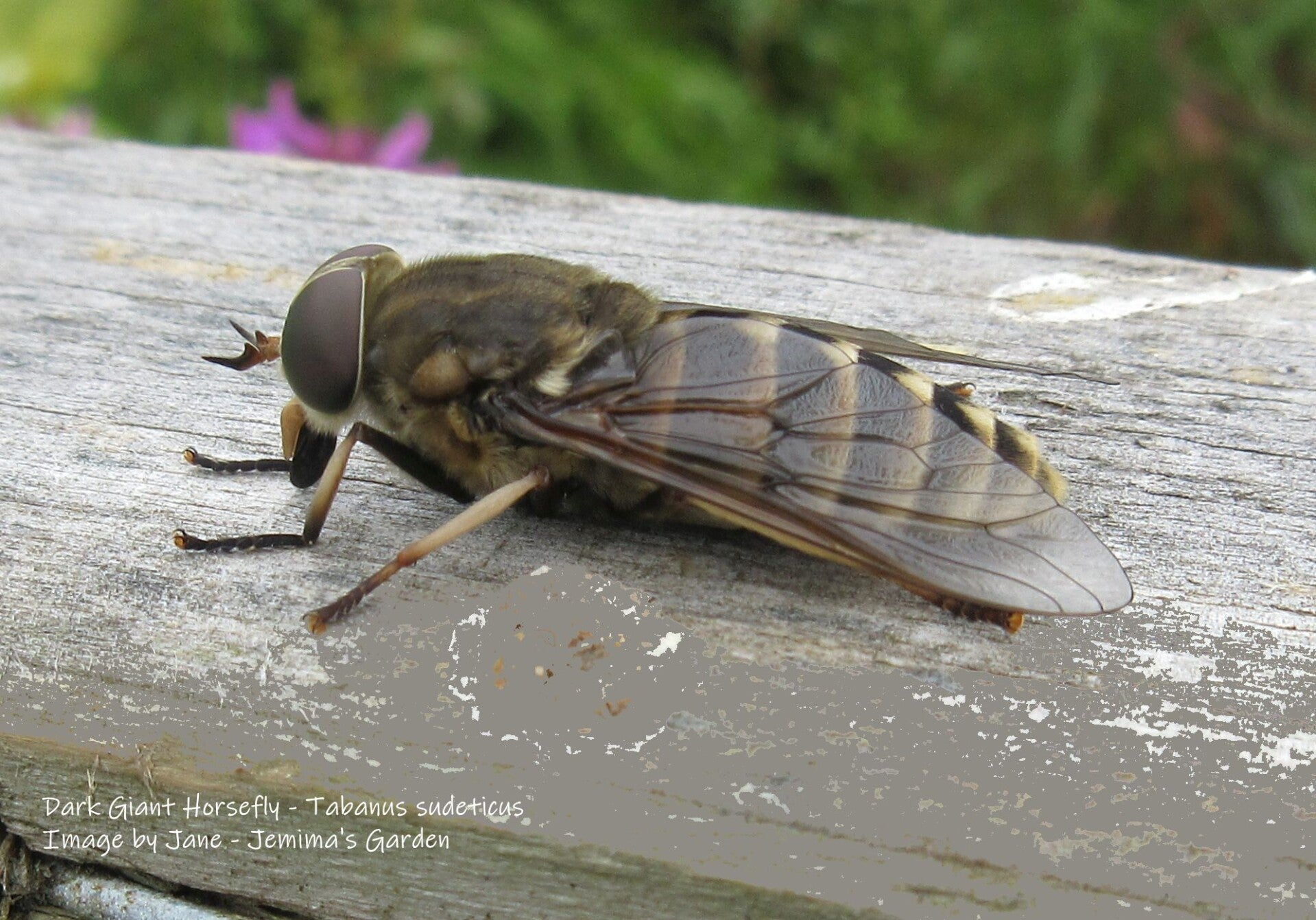
Dark Giant Horsefly -Tabanus sudeticus
This is the biggest Horsefly in the UK and according to Wikipedia, the biggest fly in Europe, with a typical body length of 20-24 mm.
They mainly take blood from Cattle and Horses, (presumably with the can-opener like apparatus on their front end), and luckily usually ignore humans.
It has a very deep and loud buzz and I thought it was some sort of Beetle or Chafer before it landed.
Despite their fearsome reputation, it spent an hour chilling on our fence and was perfectly well behaved 😊
Bumblebees
We get many different types of Bumblebee in the garden and despite having many attempts it's obvious that I'm fairly incapable of IDing them reliably.
Rather than provide incorrect info., it's safer if I stick to calling them Bumblebees although I'll show you what plants they like to feed on so you know what to grow to attract them.
Here's some Bumblebees 😊
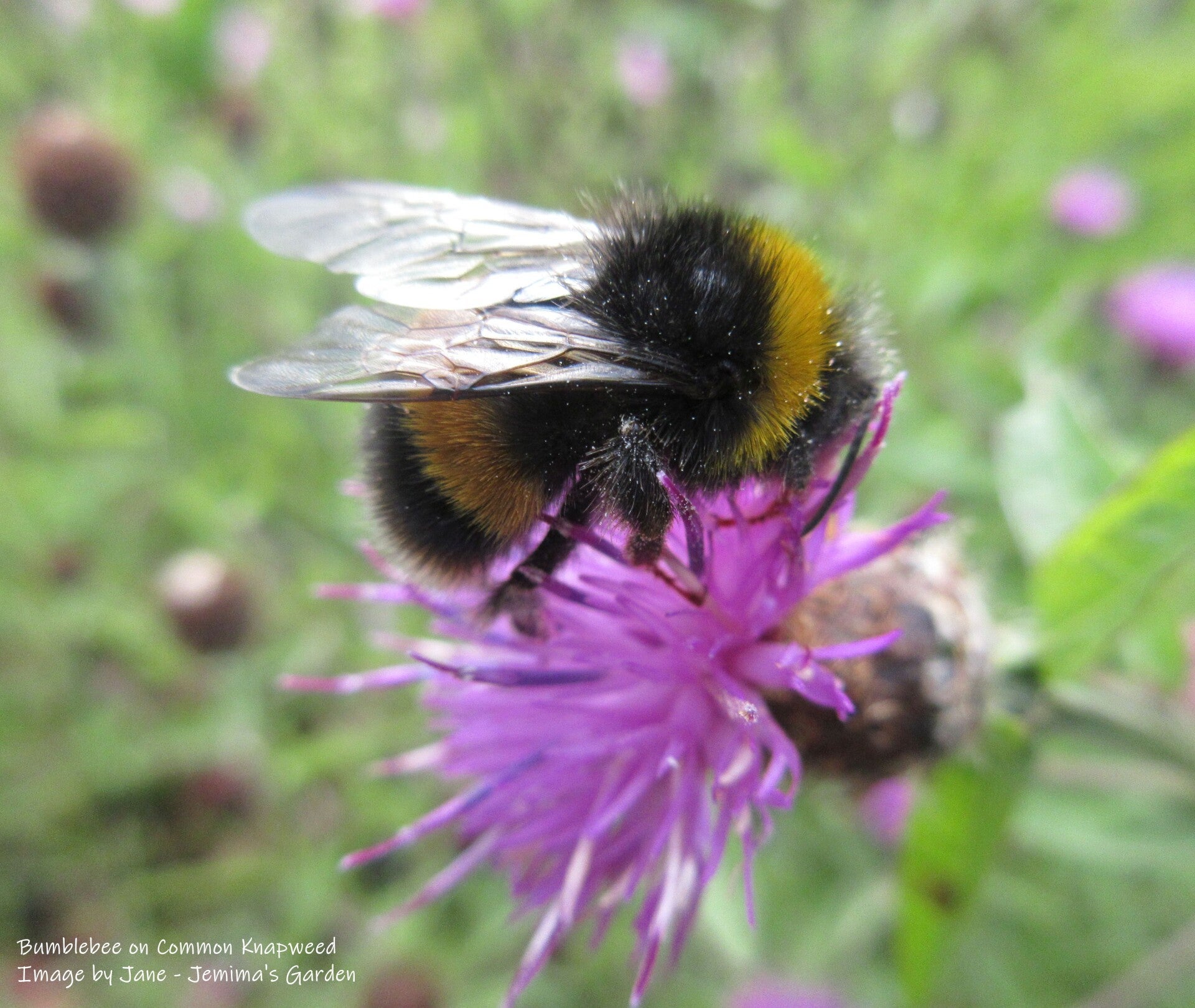
Bumblebee on Common Knapweed - Centaurea nigra - seen July
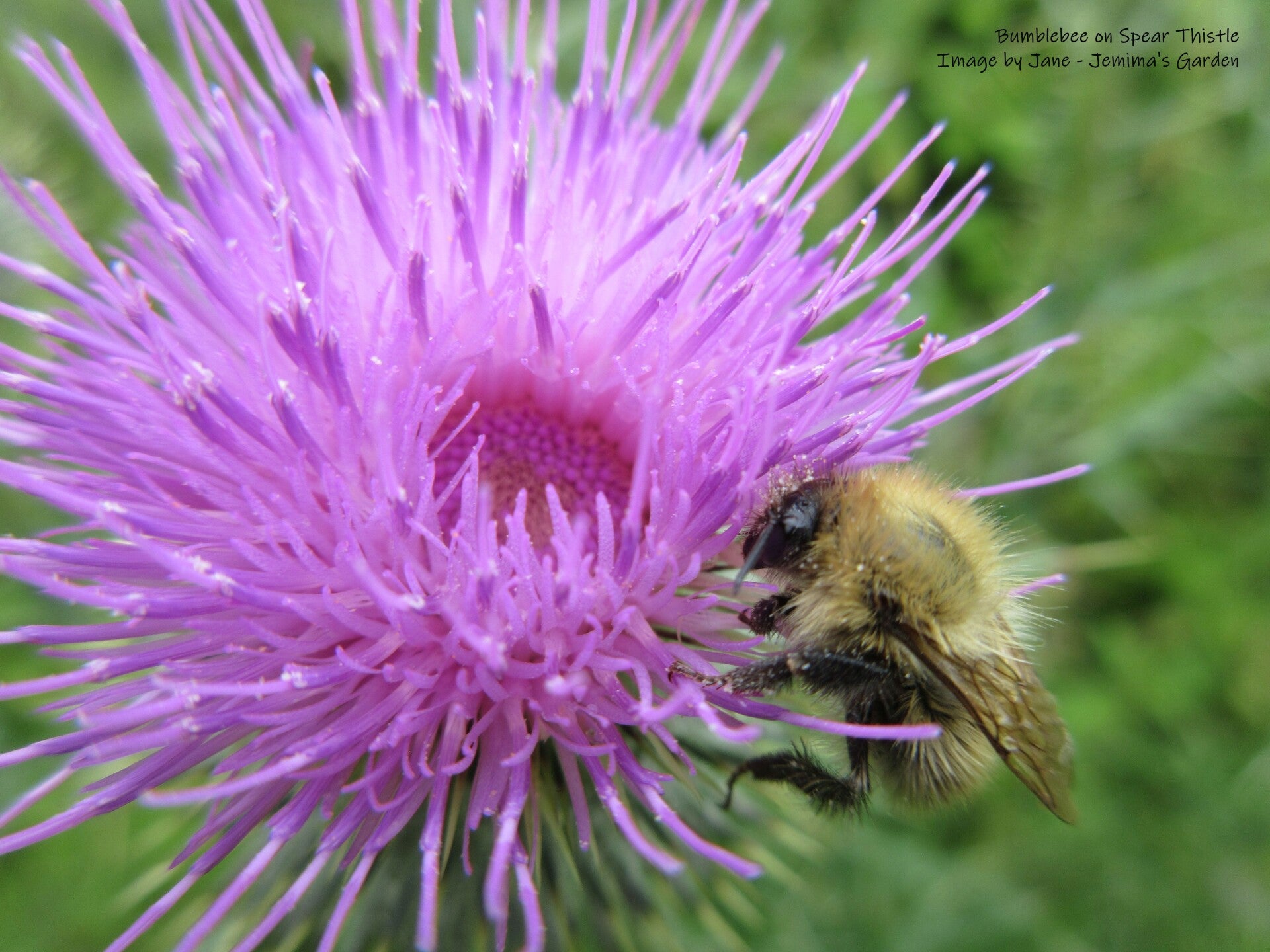
Bumblebee on Spear Thistle - Cirsium vulgare - seen July
Shield Bugs
We're getting more and more of these lovely little bugs in the garden.
I love it when I find the eggs and see them newly hatched.
These are Common Green Shieldbugs which you used to only find in Southern England. Due to climate change you can now find them much further north.
The adult bugs overwinter and emerge in spring when they lay their eggs on the undersides of leaves. The little round nymphs emerge from June.
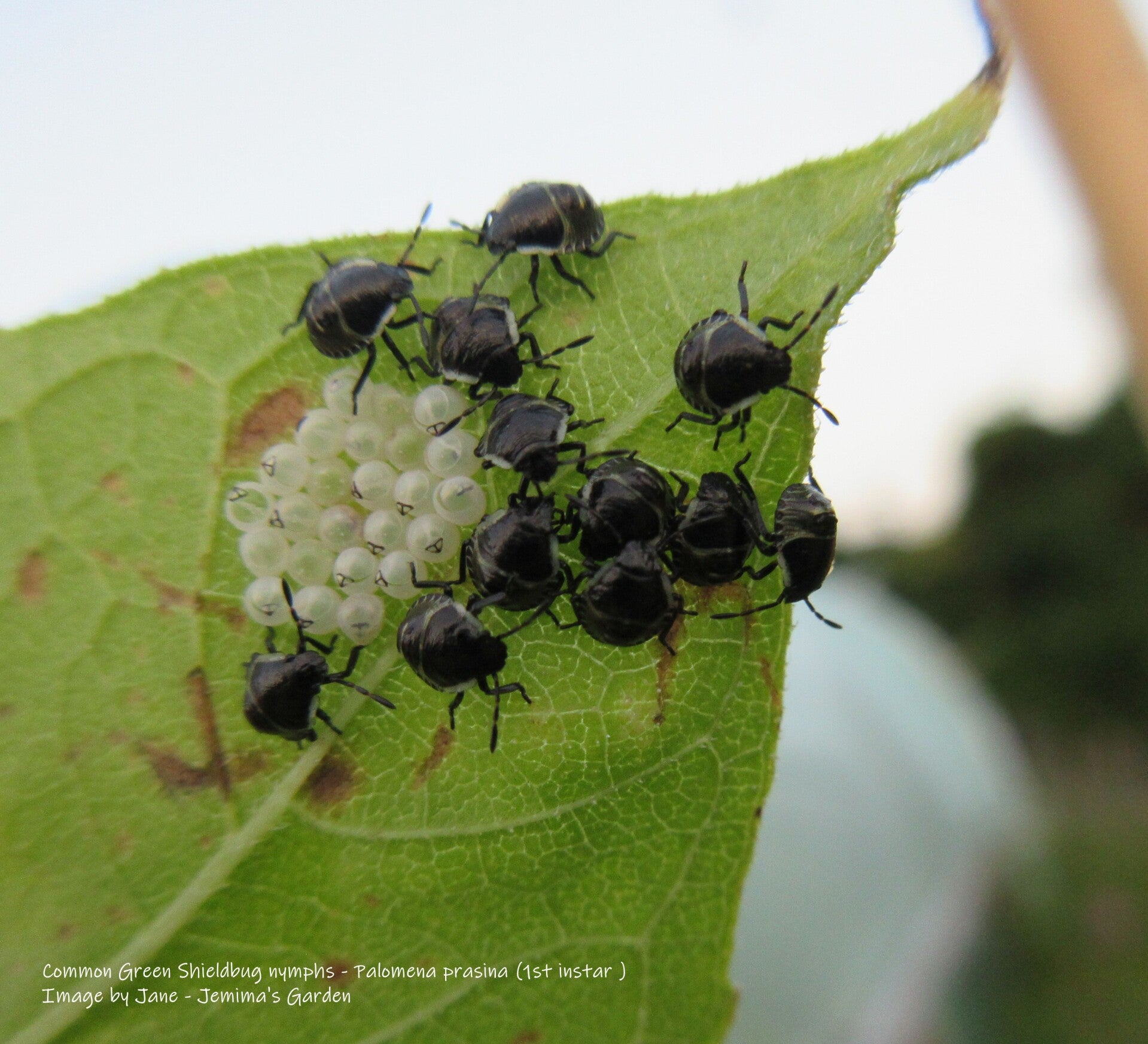
Newly hatched Common Green Shieldbug nymphs on the underneath of a Sunflower leaf.
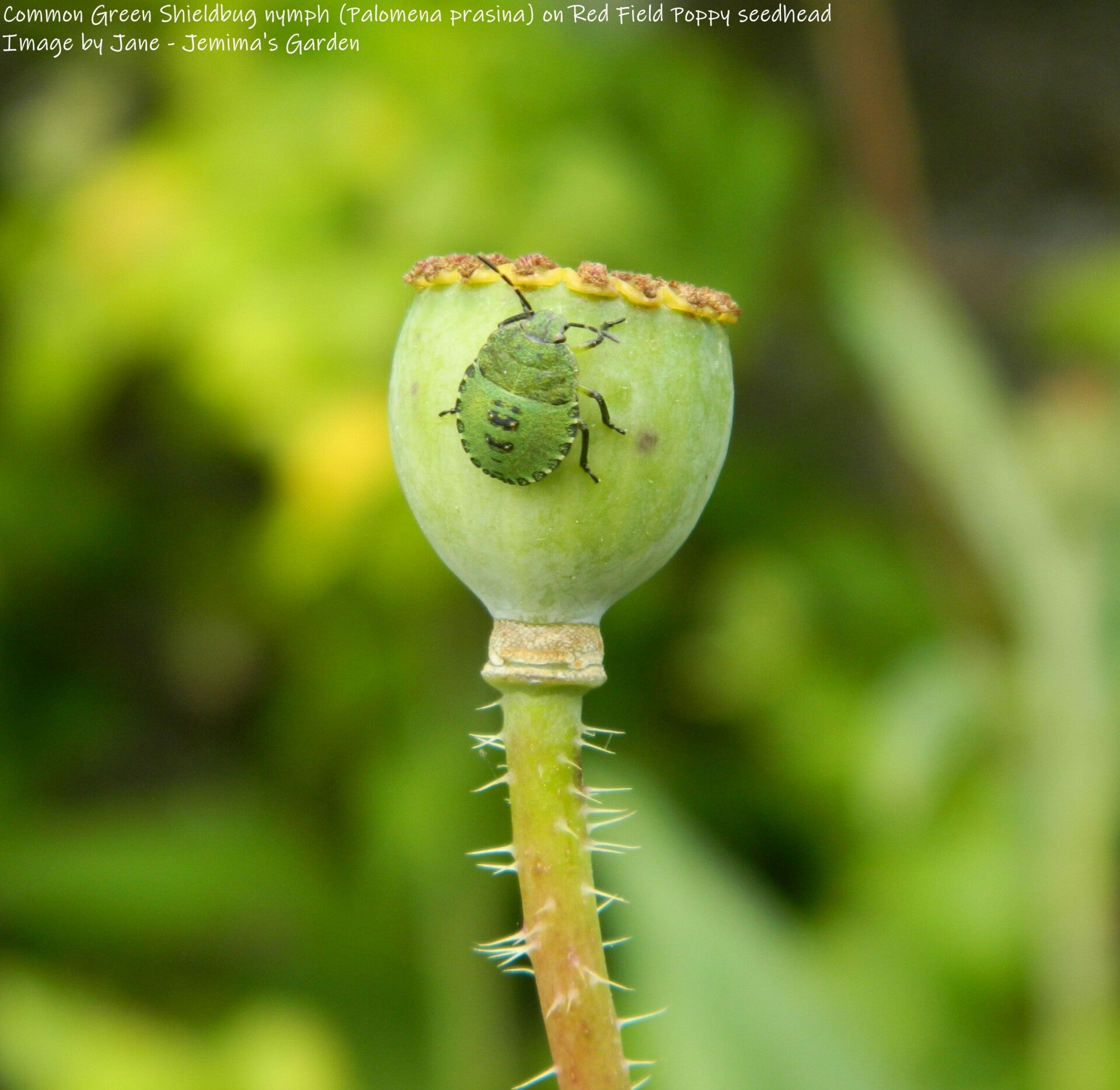
A larger, (and slightly older), Common Green Shieldbug nymph on a Red Field Poppy seedhead.
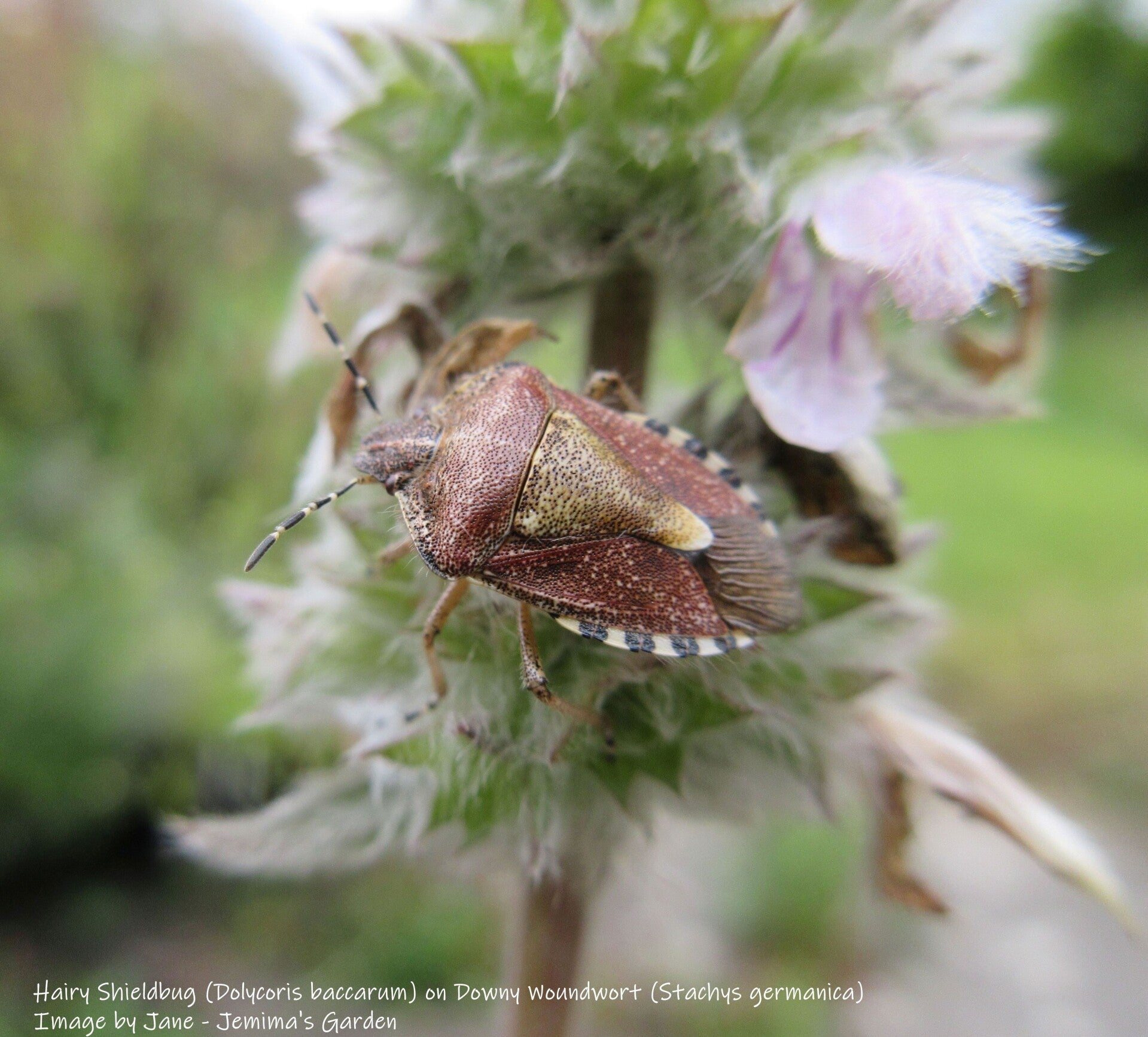
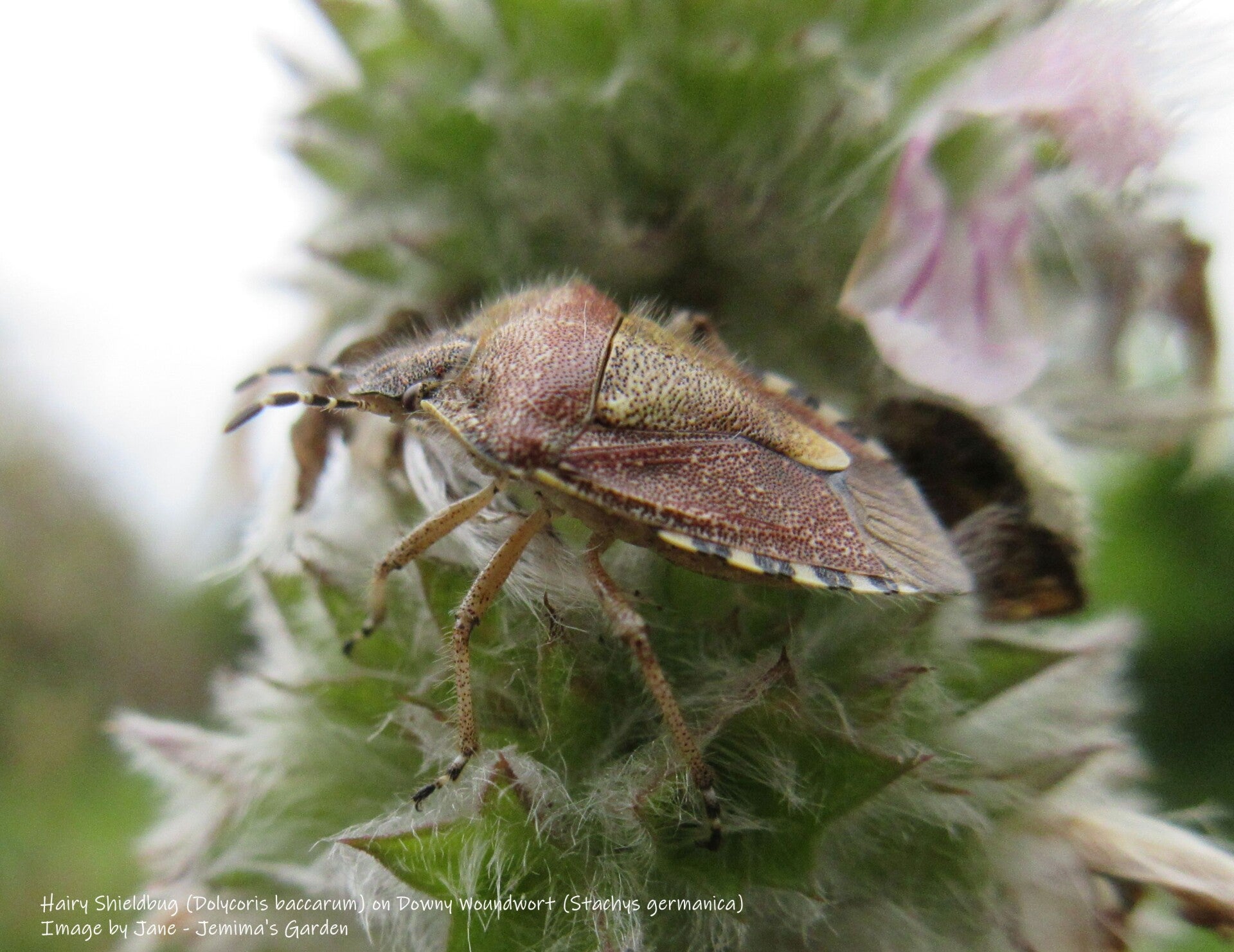
Hairy Shieldbug - Dolycoris baccarum
These very handsome shieldbugs are also known as Sloe Shieldbugs as they will feed on sloe fruit although they do eat a wide variety of other plants, seeds and fruits.
If you enlarge the pictures, (just click on them), you will be able to see just how hairy they are.
This one was keen on my equally hairy Downy Woundwort plant, (Stachys germanica).
Moths
We've seen more Moths this year and here's one of the smallest and definitely the biggest one we've observed.
This first one is a common nettle-tap moth (Anthophila fabriciana) with a wingspan of 10-15 mm. In our garden, it's very often found during the day on the Tansy, (Tanacetum vulgare), flowers or on stinging nettle which its caterpillars feed on.
This second one, a huge beast is a Poplar Hawk-moth with a wingspan of 6.5 to 9 cm. It is a night-flying moth but we discovered it resting in some long grass under a Willow Tree which is one of the larval food plants, (along with Poplar and Aspen).
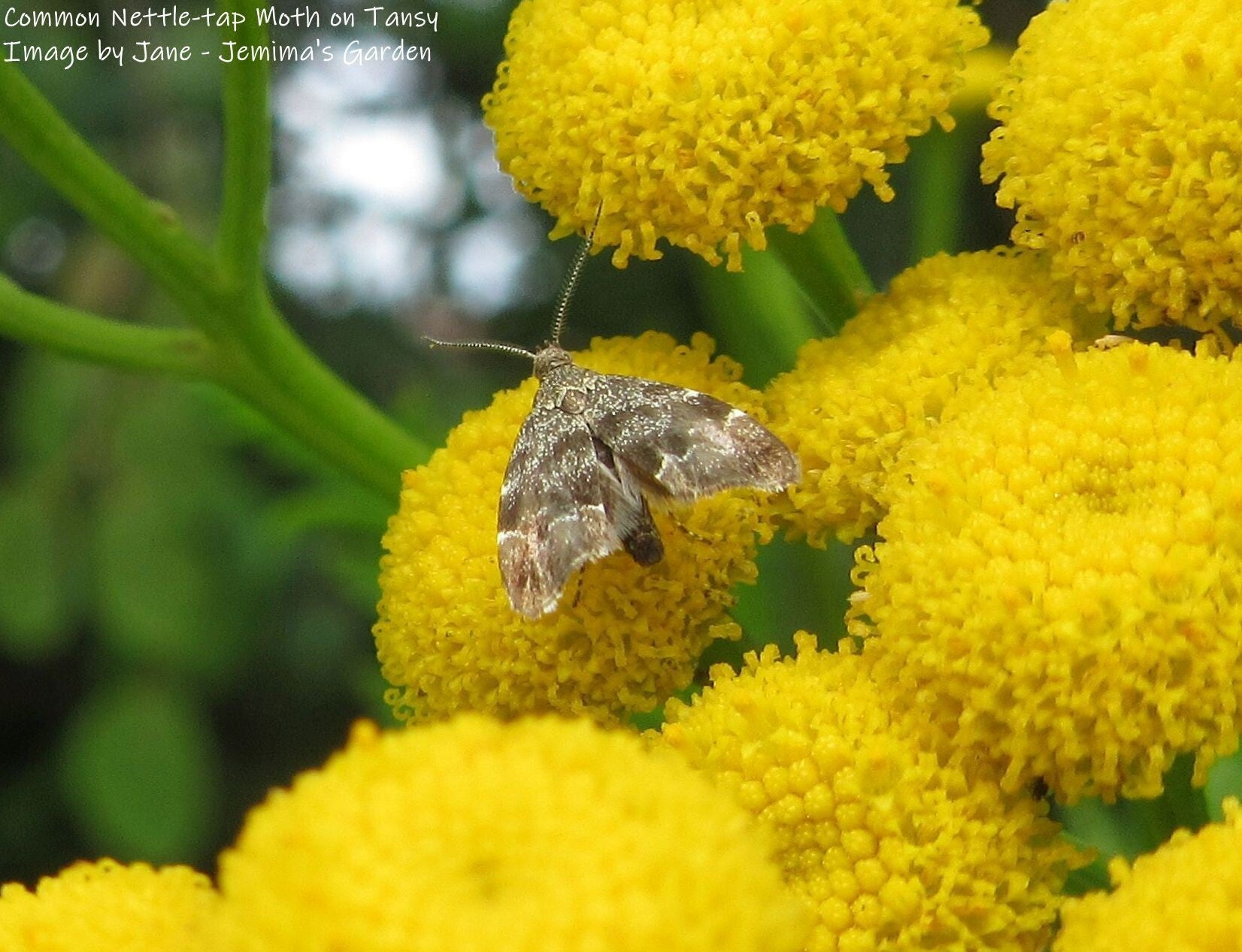
Common Nettle-tap moth - Anthophila fabriciana on Tansy flowers.
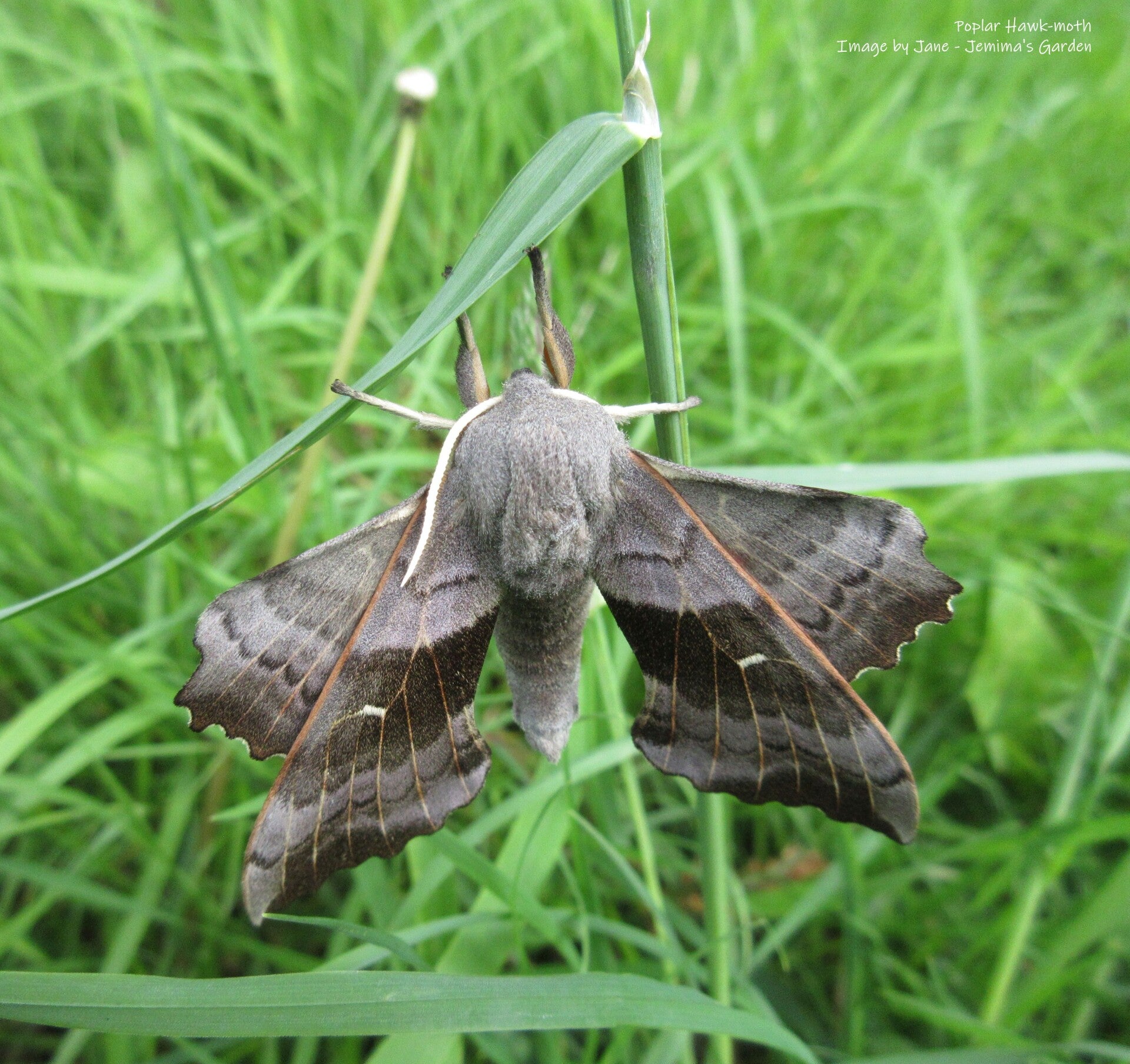
Poplar Hawk-moth - Laothoe populi resting on long grass.
Hummingbird Hawk-moth - Macroglossum stellatarum
This is not a good video at all but I'm so pleased that these have finally made their way to Scotland that I had to include it 😊
(August 2026)